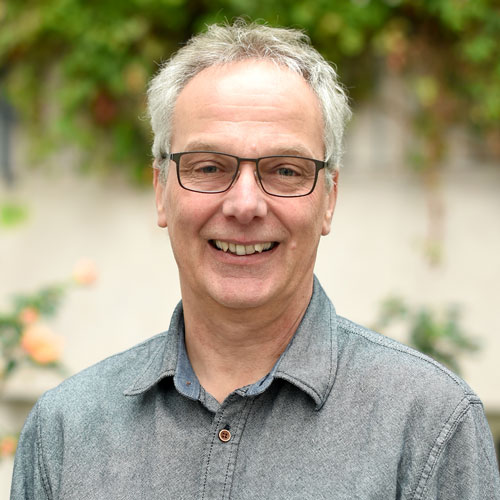
The fourth Organic Field Days will take place on June 14 and 15 for the first time in Baden-Württemberg and for the first time on a private farm, the Grieshaber & Schmid organic farm in Ditzingen, near Stuttgart. BioTOPP interviewed the project manager “Program & Network” of the Organic Field Days, Carsten Veller, and one of the farm managers of the Grieshaber & Schmid farm, Daniel Grieshaber, about the concept and special features of the Organic Field Days 2023.
Why are the Eco Field Days moving to Baden-Württemberg in 2023?
Carsten Veller: It is part of the basic concept of the Öko-Feldtage that they change throughout Germany and that the farm on which they take place is always closely interwoven with the focus of the event. The Baden-Württemberg Ministry of Food, Rural Areas and Consumer Protection (MLR) approached us back in 2019 with the wish to bring the Organic Field Days to the state. The state government of Baden-Württemberg wants to increase the proportion of organic farming to 30 to 40 percent by 2030. There is still a long way to go from the current 14.5 percent. The organic field days are one of many measures to increase the proportion of organic produce.
Why will the next Eco Field Days take place directly in 2023 after 2022?
Veller: Due to the pandemic, we had to postpone our “normally planned” Eco-Field Days 2021 at the Hessian State Domain Gladbacherhof to 2022. In order to get back into the usual rhythm of odd-numbered years and due to the new location, we are offering the Eco-Field Days 2023. An enormous challenge for all exhibitors and for the event team. The more than 300 registered exhibitors show the great interest in this event format, and I would like to take this opportunity to thank them for their trust. The next Eco Field Days are planned for 2025.
How can a family business manage such a large event?
Daniel Grieshaber: It’s a big challenge to integrate all the preparations for the Eco-Field Days into our everyday farm life. But it also gives us a unique opportunity to present our convictions and our exemplary farming methods to a broad public. We have already made very good new contacts in the run-up to the event and we can get to know various irrigation systems, which we may implement directly after the Eco-Field Days. We run the farm with three generations and three families. So many hands are involved. It only works as a family! We also receive personnel support from the MLR, FiBL and the Organic Farming Association.
What is new about the Eco Field Days 2023 concept, what is tried and tested?
Veller: The focus is still on the farm organism. Its focus on field vegetable cultivation is also a focal point of the Organic Field Days. For example, we show the latest chopping technology on a celery field and irrigation options on an area of around one hectare: very practical in the field, with experts and companies. Another topic that is closely interwoven with the farm: potato cultivation. Various advisory services demonstrate diverse aspects of organic potato cultivation. They will be showing over 20 different varieties, including numerous new breeds, hoeing technology and irrigation.
Agri-photovoltaics is also a focal point.
Veller: The climate and energy crisis requires swift action. Agri-photovoltaics with the dual use of land is being hotly debated as a new strategic approach for agriculture. We are taking up this impulse, showing example systems and offering a platform for exchanging views on the many unanswered questions surrounding agrivoltaics. Baden-Württemberg has many model projects underway in the state, and the MLR, the University of Hohenheim and the Fraunhofer Institute ISE as well as the exhibitors will be available as experts for all visitors.
What role does the Court play in the program?
Grieshaber: We are in close contact with FiBL and incorporate our experience into many aspects of the program. For example, there will be guided tours of the barn. We farm managers also provide advice on irrigation and field vegetable cultivation. The same applies to demonstration plots: We know our soils and support the trial technician in setting up the plots.
And the animal husbandry? What special features can visitors see here?
Grieshaber: Since the conversion to organic farming in 1981, our herd of dairy cows has grown from 35 to 270 and we have continued to develop our husbandry with many measures. Because sustainability in agriculture is very important to us, we keep and breed a dual-purpose breed: Fleckvieh. Since last year, the herd’s milk yield has averaged over 9,000 kilograms per cow – partly due to the very good quality of the basic feed. Together with our association, we will be presenting the journey to date at the Öko-Feldtage. We will also take a look into the future: how we intend to introduce pasture grazing and develop marketing. In addition, exhibitors will provide information on all aspects of the barn, including feeding, animal monitoring systems and calf rearing, as well as various barn equipment such as drinking troughs and manure removal systems.
Which scientific institutions do you have on board with him?
Veller: This year, we do not have a university as a co-organizer. However, the University of Hohenheim will be presenting its broad commitment to agriculture in various areas, such as on the demo plots and in the Agri-PV Special. In addition, the University of Hohenheim’s Competence Center for Organic Farming is coordinating the presence of other universities and universities of applied sciences from Baden-Württemberg. Through the MLR, all agricultural institutes in the state are on board and help to organize the Organic Field Days, such as the Agricultural Technology Centre (LTZ), the State School of Horticulture (SfG), the Baden-Württemberg Agricultural Centre (LAZBW) and others.
Venue Biohof Grieshaber & Schmid: Focus and location factors
Carsten Veller
Project manager of the Eco-Field Days –
Program & Network
Daniel Grieshaber
One of four farm managers at Biohof Grieshaber & Schmid. He runs the farm together with his brother Reinhard and sister-in-law Mirjam Grieshaber and cousin Gerhard Schmid.