


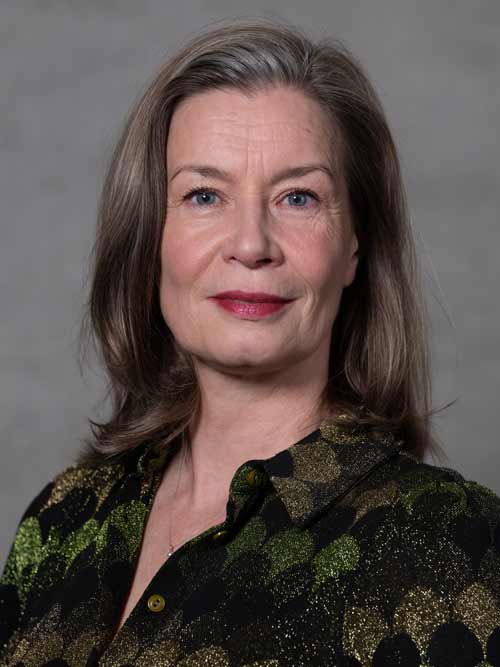
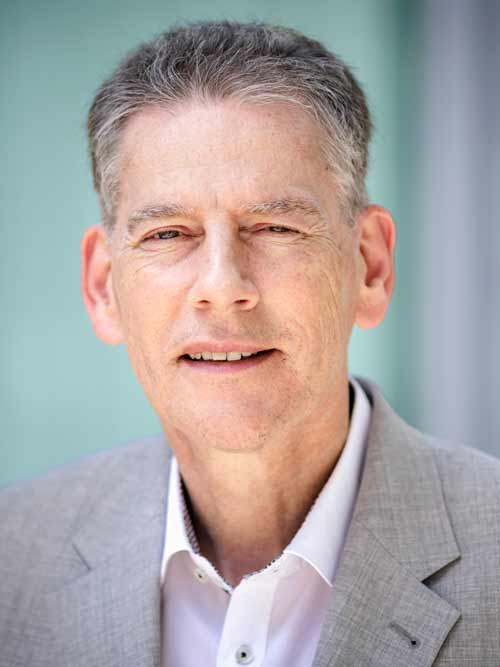
Tina Andres, Chairwoman of the German Federation of the Organic Food Industry (BÖLW) and Martin Weyand, Managing Director Water/Wastewater at the German Association of Energy and Water Industries (BDEW)
The Öko-Feldtage 2025 are taking place for the fifth time and the BÖLW has been a patron from the very beginning. What do the ÖFT mean to you?
Tina Andres: I’m really looking forward to the Öko-Feldtage – for me, they are change in action in the field. Here, farmers, breeders and researchers show in concrete terms what the agriculture of the future will look like: climate-resilient, suitable for grandchildren, organic. It’s about innovative technology, new varieties, practical knowledge – from an industry that now employs more than 380,000 people.
In Saxony, two patronages are appearing together for the first time. What connects the BÖLW with the BDEW?
Tina Andres: Organic farming and water conservation are inextricably linked. If you want clean water, you need agriculture that works with nature – not against it. Organic farming does not use synthetic chemical pesticides and mineral fertilizers. This protects soils, biodiversity – and also our water.
The fact that the BÖLW and the BDEW are acting as joint patrons shows this: Water protection is vital – and organic farming is part of the solution. We finally need a political framework that promotes precisely this. Because one thing is clear: organic farming is active water protection – and therefore an investment in the basis of life for future generations.
The focus topic of water runs through all modules at the ÖFT 25. What are the main challenges when it comes to water and agriculture?
Martin Weyand: A key challenge is the contamination of groundwater with nitrates and pesticides, which is particularly prevalent in regions with intensive livestock farming and intensive agriculture. For water suppliers, this means that increased treatment costs may arise in order to provide drinking water in accordance with legal requirements. In addition, there are growing challenges due to drought and water shortages, which require the expansion of infrastructure – such as new wells, elevated tanks or the expansion of networks.
The aim of water management is to avoid this pollution as far as possible through precautionary measures. Organic farming plays an important role in this, as it does not use synthetic chemical pesticides and reduces nitrate inputs through a balanced ratio of livestock to land. Organic farming and water supply think in cycles – this common ground is a good starting point for solutions that protect soil and water in the long term.
You are involved in the Öko-Feldtage as a patron for the first time. What win-win effects do you see in the cooperation?
Martin Weyand: “ By sponsoring the Öko-Feldtage, the BDEW wants to make the common concerns of water supply and organic farming visible: Drinking water protection and sustainable agriculture belong together. Organic farming and water management aim to use as few non-renewable resources as possible, to protect water and soil responsibly and to preserve soil fertility and biodiversity in the process. The cooperation offers the opportunity for mutual political exchange, for example on issues relating to nitrate, pesticides or the further development of the Fertilizer Ordinance. The professional discussion at eye level – e.g. on practical approaches to material flow balances or the promotion of conversion farms – is also a benefit for both sides. The aim is to set common priorities and achieve concrete progress for the environment, agriculture and water supply. This is a strong signal, especially in times of increasing demands for resource conservation and security of supply.